
Riverboat Heritage
The River That Built
the Queen City
Before the highways and long before the airport, everything that made Cincinnati arrived by water. Pork and produce, pianos and passengers, fortunes and families: for most of the nineteenth century, the Ohio River was the front door of the city, and the riverboat was how you knocked.
It's hard to overstate what the steamboat meant here. Before steam, a flatboat could float goods downriver to New Orleans, but the boat was usually broken up and sold for lumber at the far end because there was no practical way to bring it home. Steam power changed the direction of the river. Suddenly Cincinnati merchants could trade both ways, and the city boomed into one of the largest inland ports in the country.
The Public Landing at the foot of Main Street became a forest of black smokestacks. Steamboats loaded and unloaded around the clock, boiler shops and boatyards lined the banks, and Cincinnati itself became one of America's great steamboat-building cities. Travelers wrote home about the paddlewheelers three deep at the wharf. Poets called the boomtown the Queen of the West, and the name never left.
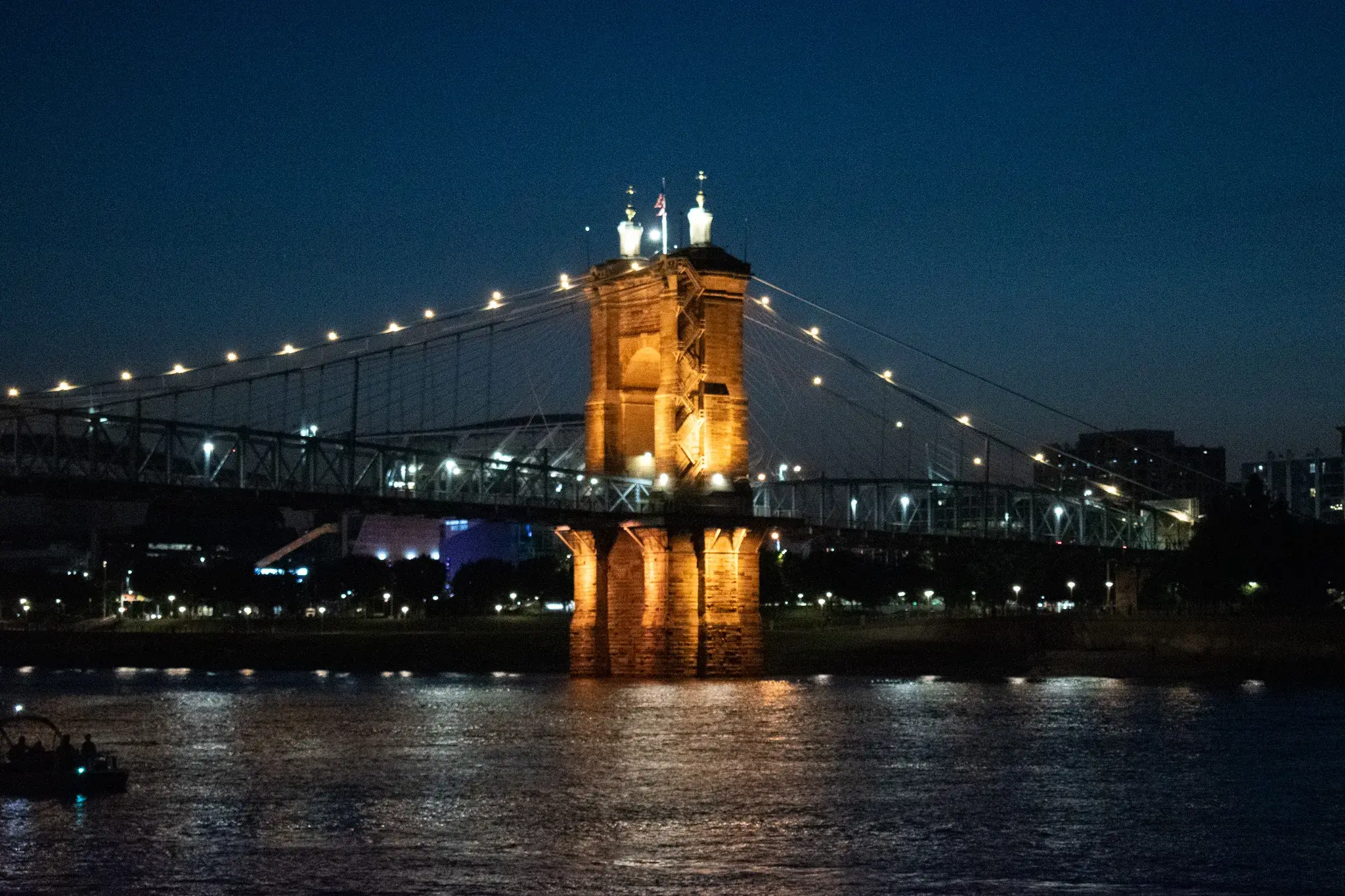
Kentucky was always half the story. The towns across the river, Covington, Newport, and Dayton, grew up with the same river traffic, and in 1866 John A. Roebling connected the two banks with the longest suspension bridge in the world. Cincinnatians would recognize its towers and cables anywhere: Roebling refined the design a decade later into the Brooklyn Bridge. Ours came first.
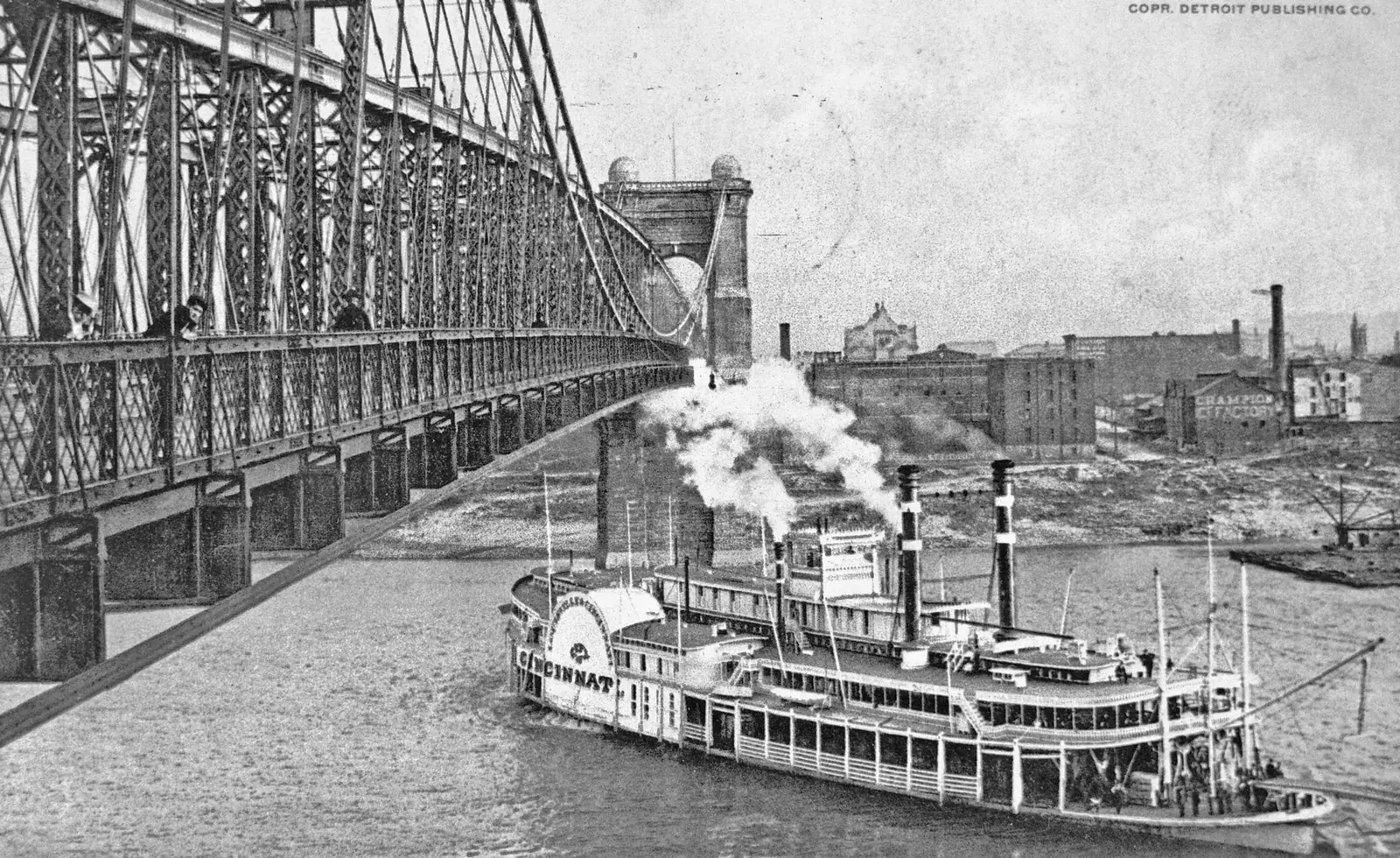
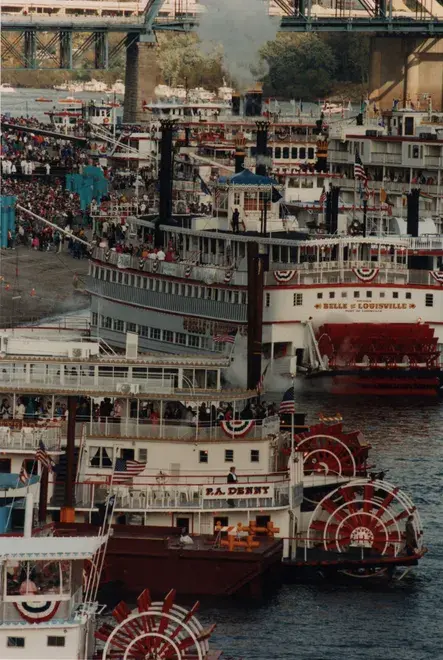
Railroads and highways eventually took the freight, but they never took the romance. The paddlewheeler survived as something better: a way to celebrate. Excursion boats carried generations of Cincinnatians to moonlight dances and Sunday outings, and when the city threw its great Tall Stacks festivals, starting in 1988, millions came to the riverfront to watch the paddlewheelers gather like it was 1850 again.
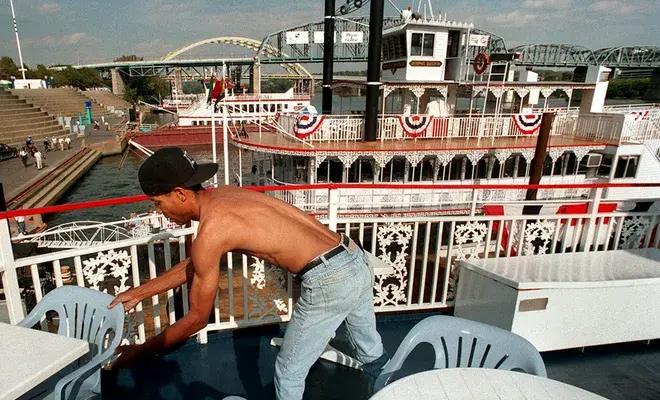
That's the tradition the Spirit of Cincinnati carries every season. An authentic paddlewheeler, working the same water, passing under the same bridge, from a dock in Dayton, Kentucky that's been part of river life for over a century. When your family boards for a dinner cruise or a reunion, you're not just seeing the skyline. You're part of the oldest show in town.
A Brief History
Two Centuries on the Ohio
1811
The Steamboat Arrives
The steamboat New Orleans passes Cincinnati on the first powered voyage down the Ohio and Mississippi. Within a generation, steam power turns the river from a one-way flatboat route into a two-way highway, and Cincinnati sits right in the middle of it.
1820s-1850s
Queen City of the West
Cincinnati becomes one of the busiest inland ports in America. The Public Landing crowds with stacks and paddlewheels, the city builds steamboats by the hundreds, and poets give the boomtown its lasting nickname: the Queen City of the West.
1866
The Roebling Bridge
John A. Roebling spans the Ohio with the longest suspension bridge in the world at the time, connecting Cincinnati and Covington. He would use its lessons to design the Brooklyn Bridge. Every cruise we run still passes beneath it.
1988-Today
The Tradition Continues
Cincinnati celebrates its riverboat soul with the great Tall Stacks festivals, gathering paddlewheelers from across the country at the Public Landing. Since 2003, Queen City Riverboats has kept that tradition working every season aboard the Spirit of Cincinnati.
See It From the Water
The best way to understand this history is from the deck of a paddlewheeler. Join us for a sightseeing cruise or make an evening of it with dinner on the river.
Or call us at (859) 292-8687.